Structural Drying in Temecula, CA
Surfaces dry in a day. Framing, slab, subfloor and wall cavities take longer, and they are what matter. The drying team sets equipment to each room's load and logs readings until the structure matches a dry reference.
(888) 450-9281Get the Temecula drying started today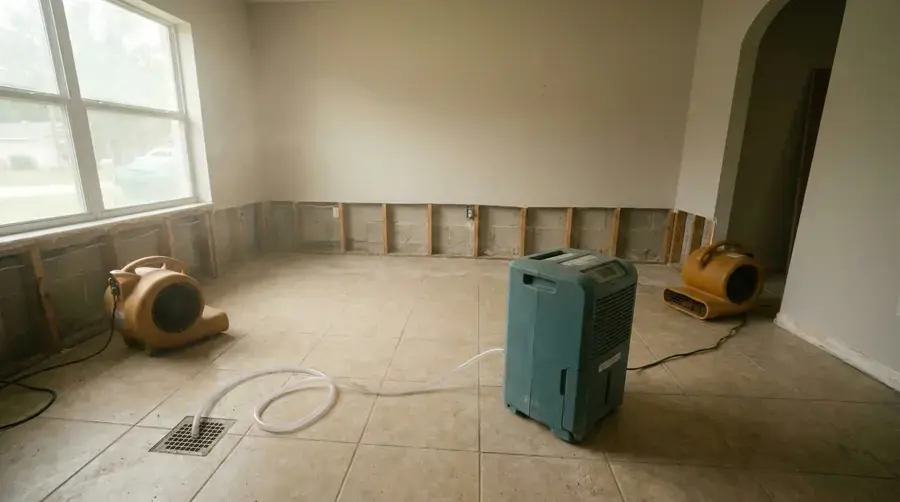
What does structural drying cost in Temecula, CA?
In Temecula, CA, structural drying typically runs $1,000 to $6,000, depending on how many rooms are wet, the material class (drywall dries faster than hardwood, plaster or a thick slab), the equipment count and how many days it takes to reach the drying goal.
For a closer planning number, try the water damage cost calculator. A firm price comes from the restoration company once it has seen the damage.
How structural drying is handled in Temecula
- Step 1
Walkthrough and moisture map
The tech who does the walkthrough traces the source, then maps wet drywall, subfloor and slab with thermal imaging and pinless meters before any equipment goes down.
- Step 2
Extraction
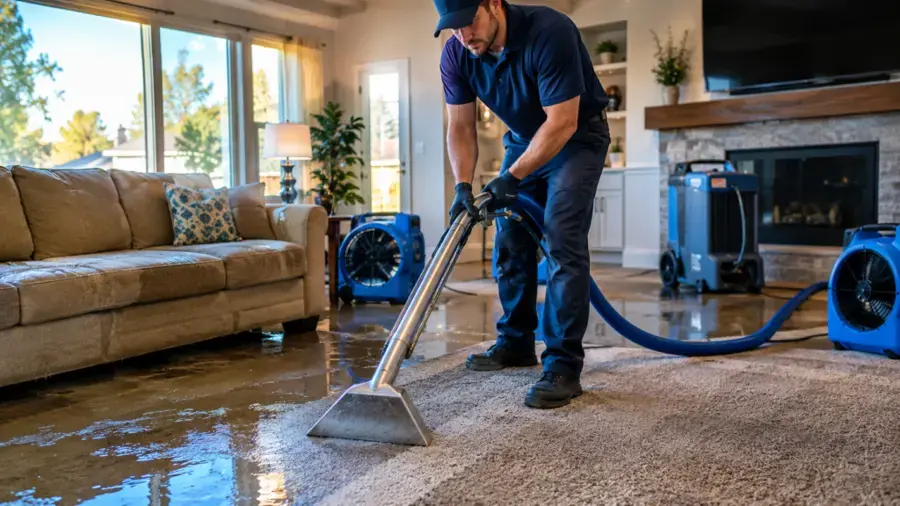
The extraction crew pulls standing water with truck-mounted extraction, so the water leaves the house instead of wicking into the next room.
- Step 3
Drying set
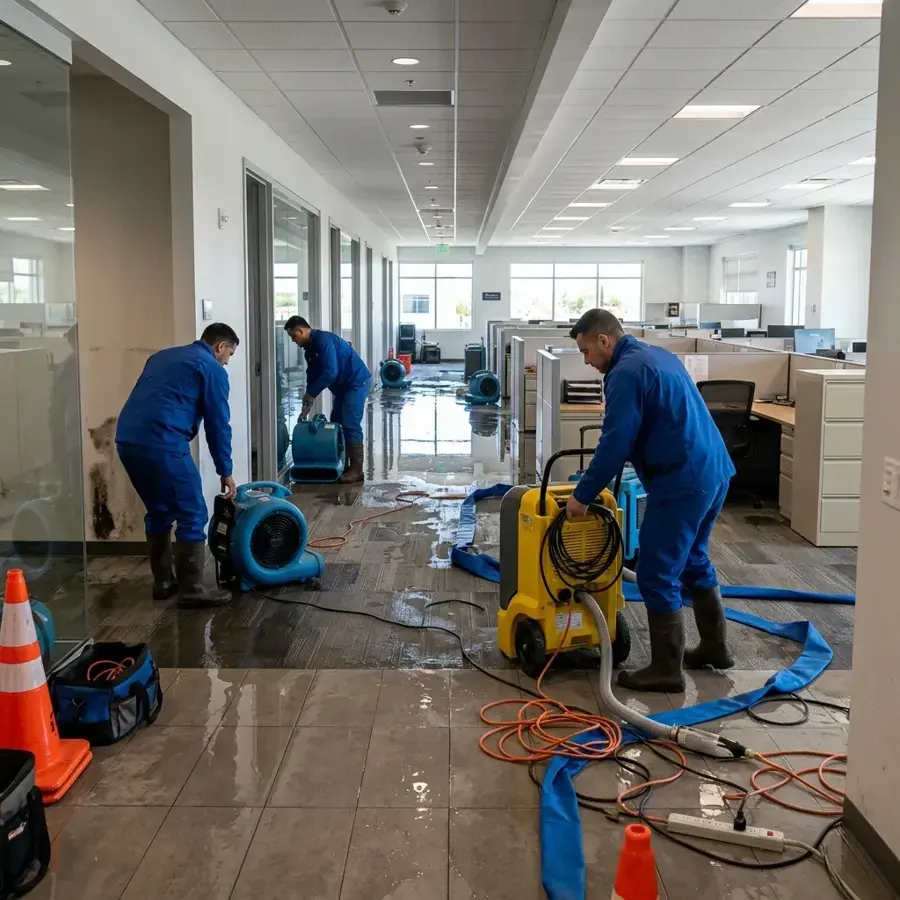
The drying team places air movers to each room's evaporation load and runs LGR dehumidifiers, with desiccants for dense Class 4 materials like hardwood and plaster.
- Step 4
Daily readings and the claim file
The drying team logs readings every day until wet materials land within 2 to 4 points of a dry reference, and the moisture map, logs and photos go into the claim file.
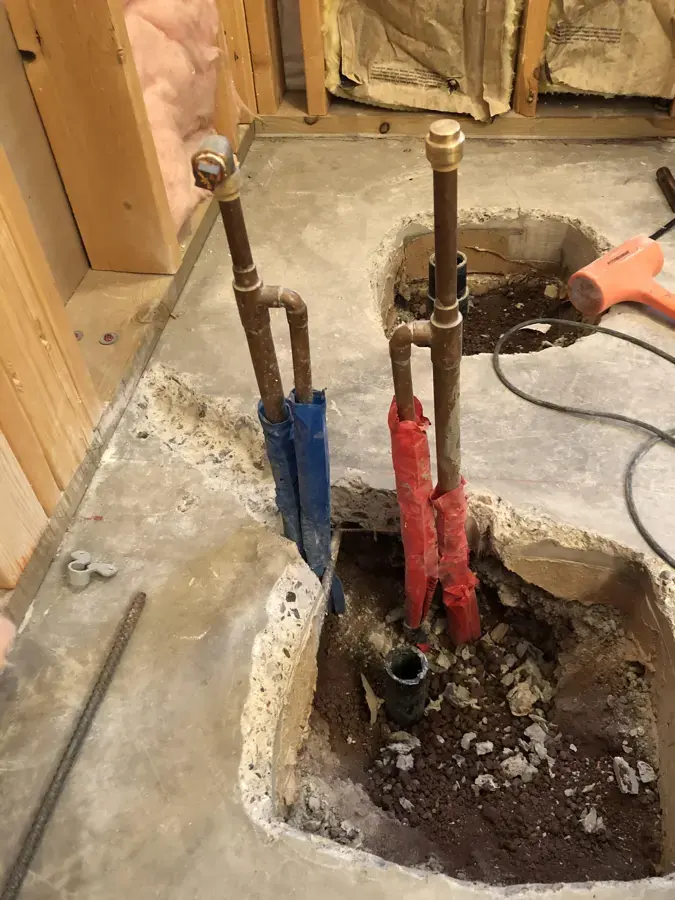
Structural drying is the part of a water loss that decides whether problems show up months later. Drywall can look dry while the stud behind it is still wet, and a slab can hold water long after the carpet above it is gone. The IICRC S500 standard sets how the drying is planned and how it is proven finished.
How the drying plan is set
- Moisture mapping with pinless meters, pin meters and thermal imaging marks every wet area
- The class of loss, Class 1 through 4, sets how much equipment each room needs
- Air movers go in at the room's evaporation load, aimed along wall bases
- LGR dehumidifiers pull moisture out of the air; desiccant units handle dense Class 4 materials
The drying goal, not a calendar
Every day the drying team records temperature, humidity and grains per pound in the room and outside, plus readings on each wet material. Equipment comes out when those materials land within 2 to 4 points of a dry reference, a matching material in an unaffected part of the same building.
Temecula's dry summer air helps drying; winter storm air does not. The drying team closes the house and lets the dehumidifiers do the work instead of opening windows.
The EPA cleanup page explains why wet materials must dry quickly, and the Department of Energy moisture control page covers how moisture moves through a house.
Trade standards on every structural drying job
Drying is finished at 2 to 4 points of a dry reference
Class 1 through 4 sets the equipment count
Psychrometric readings are logged every day
Desiccant units handle hardwood, plaster and thick slabs
Structural Drying across Temecula
The restoration team handles structural drying in every Temecula ZIP code and the neighboring Temecula Valley communities.
The restoration team covers all of Temecula, from Old Town and Harveston to Redhawk, Vail Ranch and the wine country, plus Murrieta, French Valley, Winchester and Wildomar.
ZIP codes 92589, 92590, 92591, 92592 and 92593.
See every area coveredRelated water damage services in Temecula
Structural Drying questions
Why can't I turn off the fans at night?
Drying depends on steady airflow and dehumidification. Turning equipment off lets moisture move back into the materials and adds days.
How does the drying team know the house is dry?
Readings on each wet material are compared with a dry reference in an unaffected part of the house. Equipment comes out when they land within 2 to 4 points.
What is the difference between Class 1 and Class 4?
Class 1 is a small area with low-porosity materials. Class 4 means dense materials like hardwood, plaster or concrete that hold water and need specialty drying.
How long does structural drying take?
A contained Class 1 loss usually dries in three to five days. Hardwood, plaster and slabs take longer.
Can hardwood floors be saved?
Often, if drying starts early. Floor-drying mats and dehumidification pull water out of the boards and subfloor; boards that cupped badly may still need replacing.
Is drying documented for insurance?
Yes. The moisture map, daily readings and photos form the drying log that adjusters use.
Walls still wet in your Temecula home? Call now.
Surface-dry is not dry. The drying team runs equipment to a measured goal and logs every reading for the claim file.